
Why Does Nvidia Remain at the Center as the GPU Market Grows?
GPU demand is rising across AI, data centers, gaming, and AR/VR, and Nvidia remains at the center with a dominant market share.
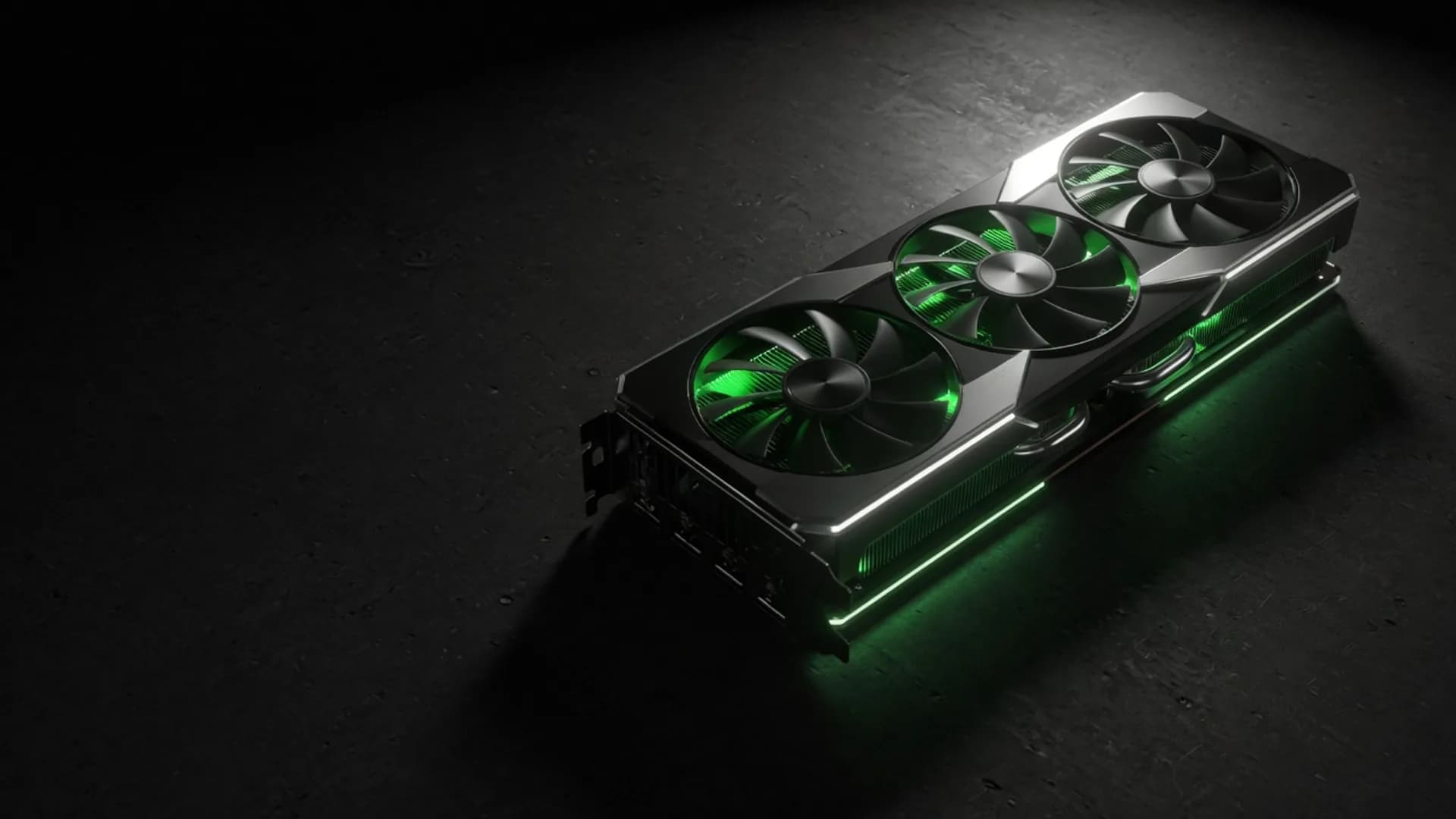
The graphics processing unit market has long since moved beyond being a hardware topic confined to gaming PCs. Today, the same chips are used across a wide range of areas, from artificial intelligence models and data centers to smartphones and AR/VR applications. That expansion is also pushing the market size upward. According to one estimate, the GPU market was worth $101.54 billion in 2025 and is expected to reach $1,712.56 billion by 2035. That would mean a compound annual growth rate of 32.62%.
Nvidia stands out here not just as a major player, but as one of the names shaping the direction of the market. The company’s share in the discrete graphics segment is seen at 92% as of 2025. That figure makes it clear why Nvidia is the first brand that comes to mind when people think of GPUs.
What Exactly Does the GPU Market Cover?
A GPU, or graphics processing unit, works as a type of hardware capable of parallel computing beyond image processing. While CPUs often execute tasks sequentially, GPUs can handle many operations at the same time. This difference makes them valuable not only in games, but also in 3D rendering, video editing, machine learning, and AI workloads.
That is where the market’s growth story begins. In the early days, GPUs were associated mostly with gaming. Now they have a much broader use case, ranging from systems training text-generating models to cloud data centers. Sources list AI, machine learning, cloud computing, data centers, gaming, the Internet of Things, autonomous vehicles, and AR/VR applications among the main drivers of this expansion.
This picture turns the GPU from a consumer hardware product into a core computing infrastructure layer. The graphics card market is moving in the same direction. Another estimate puts the global graphics card market at $23.57 billion in 2025, with growth projected to reach $97.4 billion by 2034. The growth rate is lower here, at around 17%. Still, the direction is the same: demand is rising, and use cases are expanding.
Nvidia’s Strength Is Not Limited to Gaming
To understand Nvidia’s position today, the company should not be seen merely as a brand that makes gaming hardware. It is described as one of the world’s leading manufacturers of high-performance GPUs. On top of that, it has become an important supplier in AI infrastructure.
Its parallel processing power makes it a strong choice for AI training. During model training, large data sets require enormous numbers of mathematical operations, and GPUs can perform these operations simultaneously, speeding up the process. The same logic applies during inference, when a model responds quickly to user queries. In short, GPUs provide not only speed here, but also scale.
That is why Nvidia’s influence is felt not only in its product lineup, but also in infrastructure deployments. The company is said to have contributed 10,000 Nvidia GPUs to the supercomputer used by OpenAI’s ChatGPT system. This detail clearly shows how GPUs now play a role far beyond gaming performance.
Another important detail is visible in Nvidia’s production pace. The company is said to be able to produce a new chip roughly every six months, while the industry’s historical average is 18 months. That gap represents not just a technological advantage, but also a major edge in supply and refresh speed.
Gaming Still Matters, But It Is Not the Only Driver
The gaming ecosystem still holds an important place in the graphics card market. New-generation games, higher resolutions, and 4K and 8K displays all demand stronger video processing and rendering capabilities. Add virtual reality (VR) and augmented reality (AR) applications to that mix, and the graphical workload rises significantly.
But demand is not coming only from players. Data center operators, cloud providers, research labs, and enterprise IT teams are also becoming a much larger buyer base. These buyers look not only at performance, but also at memory bandwidth, thermal efficiency, and compatibility with AI frameworks. In other words, the criteria for buying GPUs have changed.
The global graphics card market is said to be led by Asia Pacific in 2025, with a 48.22% share. The region’s strength in both manufacturing and consumer electronics also shows where the market’s center of gravity lies. North America remains influential thanks to GPU design and cloud giants. Europe’s share is felt more in advanced industrial computing applications.
What Will Determine the Balance in the Coming Years?
Growth expectations in the GPU market are not based on a single wave of demand. The need for AI training, gaming hardware demand, data center investment, and integration into smart devices are all moving at the same time. That makes the market more resilient. Even if demand slows in one area, expansion in another can help maintain balance.
Pricing also remains an important factor here. In the graphics card industry, prices are shaped by semiconductor cycles and shifts in demand across different areas such as gaming, data centers, and cryptocurrency. Production capacity, advanced packaging technologies, and innovations in GPU architectures also shape the supply side.
That is why the GPU market is no longer just a graphics card market for gaming. Nvidia’s strong position, the AI-driven expansion of use cases, and the growing needs of data centers have become parts of the same story. As the market grows in scale, the real question is no longer how much demand will rise, but which manufacturer can meet that demand, and how quickly.